
Inclusive Anatomy
Historical Timeline
1800
Early 19th Century
Franz Joseph Gall
Concepts of localization of function emerged, building on earlier anatomical theories proposed by Franz Joseph Gall, despite the later rejection of phrenology.[1]
1861-1865
Paul Broca
Paul Broca demonstrated that lesions in the left posterior inferior frontal gyrus resulted in impaired speech production, establishing the anatomical basis of expressive language.[6]
Korbinian Brodmann
1901-1909
Korbinian Brodmann, influenced by the cytoarchitectural work of Oskar Vogt and Cécile Vogt-Mugnier, developed a systematic cortical map based on cellular organization.[2]
1909
Korbinian Brodmann
Brodmann published Vergleichende Lokalisationslehre der Großhirnrinde, identifying 52 distinct cortical regions, including areas 44 and 45.[2]
Present
Eponym:
Broca’s area is named after Paul Broca (1824-1880), a French anatomist, surgeon, and anthropologist. Broca was born in Sainte-Foy-la-Grande, France, and earned his medical degree from the University of Paris in 1848.[6] Through clinicopathological correlation, most notably in his study of the patient Louis Victor Leborgne (“Tan”), Broca identified the left posterior inferior frontal gyrus as critical for speech production. His findings established the principle of hemispheric lateralization of language and remain foundational in neuroscience.[6]
Brodmann areas 44 and 45 are named after Korbinian Brodmann (1868-1918), whose cytoarchitectonic classification of the cerebral cortex provided a structural framework that was used in both clinical and research contexts.[2] However, these terms are less commonly used today.
Scientific Contributions:
Broca’s discoveries transformed the understanding of language localization and inspired subsequent mapping of sensory and motor functions within the cerebral cortex. Brodmann’s work bridged microscopic anatomy and functional neuroscience by correlating cortical cellular organization with distinct cognitive functions. His classification system remains a cornerstone of neuroanatomy, neurology, and neuroimaging.[2] Together, the work of Broca and Brodmann laid the foundation for modern concepts of cortical specialization and functional neuroanatomy.[6]
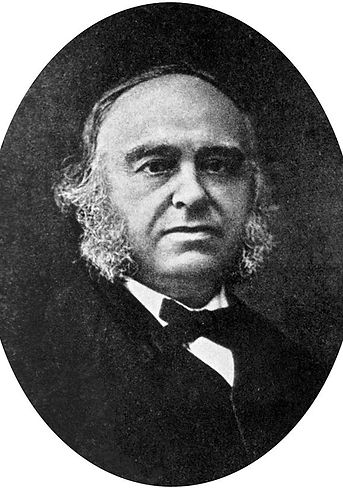
Paul Broca- Image Obtained From: Hulton Archive/Getty Images
References
-
Finger S. Paul Broca (1824-1880). J Neurol. 2004;251(6):769-770. doi:10.1007/s00415-004-0456-6
-
Berker EA, Berker AH, Smith A. Translation of Broca's 1865 report. Localization of speech in the third left frontal convolution. Arch Neurol. 1986;43(10):1065-1072. doi:10.1001/archneur.1986.00520100069017
-
Buckingham HW. The Marc Dax (1770-1837)/Paul Broca (1824-1880) controversy over priority in science: left hemisphere specificity for seat of articulate language and for lesions that cause aphemia. Clin Linguist Phon. 2006;20(7-8):613-619. doi:10.1080/02699200500266703
-
Brodmann K. Brodmann’s: Localisation in the Cerebral Cortex. 3rd ed. Springer; 2005.
-
Zilles K. Brodmann: a pioneer of human brain mapping-his impact on concepts of cortical organization. Brain. 2018;141(11):3262-3278. doi:10.1093/brain/awy273
-
Loukas M, Pennell C, Groat C, Tubbs RS, Cohen-Gadol AA. Korbinian Brodmann (1868-1918) and his contributions to mapping the cerebral cortex. Neurosurgery. 2011;68(1):6-11. doi:10.1227/NEU.0b013e3181fc5cac
We strive to ensure the accuracy of all content. If you notice any errors or have suggestions for improvement, please reach out to us so we can review and update the material accordingly.